Butt Welding
Our world-class butt welding machines provide end-to-end resistance welding for bars, tubes, rings, and formed sections where forged joint strength, repeatability, and production speed are required.
AC Butt Welding
A proven, cost-effective flash-butt welding platform for standard production where robust operation and simpler power architecture are priorities.
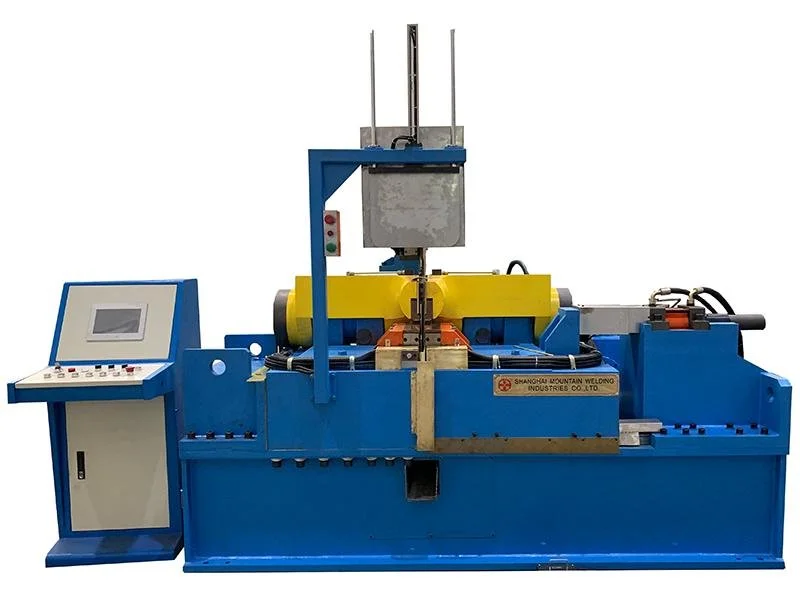
UNC-400
400 kVA power
250 mm min. diameter
320 mm max width
1800 m㎡ max cross section
500 kN clamping force
250 kN max upset force
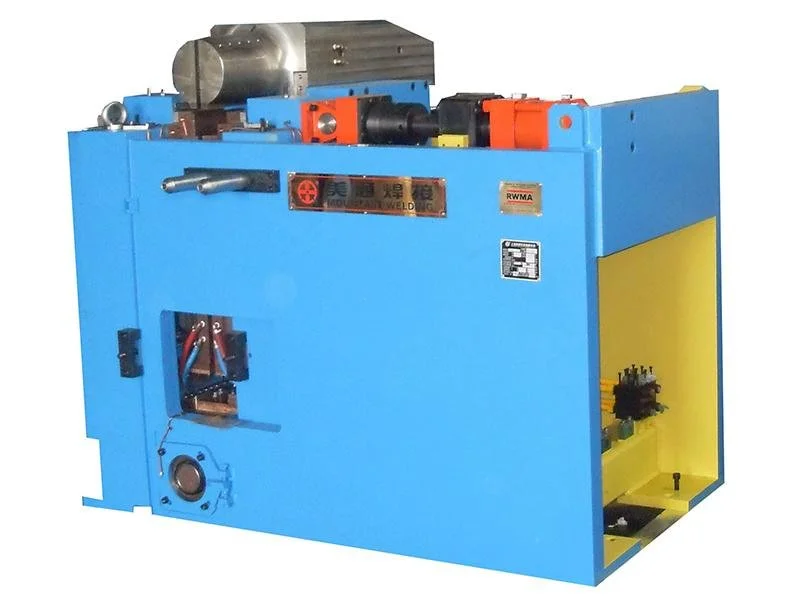
UNC-800
800 kVA power
300 mm min. diameter
430 mm max width
2150 m㎡ max cross section
700 kN clamping force
350 kN max upset force
DC Flashless Butt Welding Machine
Clean, controlled DC upset welding for butt joints that need minimal material loss, reduced cleanup, and no flash burn-off.
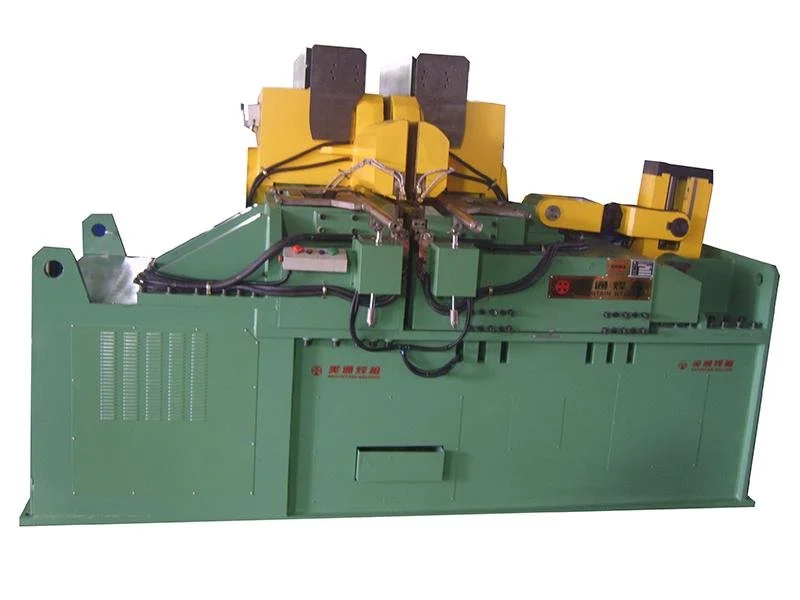
DC Flash-Butt Welding Machine
High-current DC flash-butt welding for demanding sections, combining flash-weld interface cleaning with reduced loop reactance and strong power delivery.
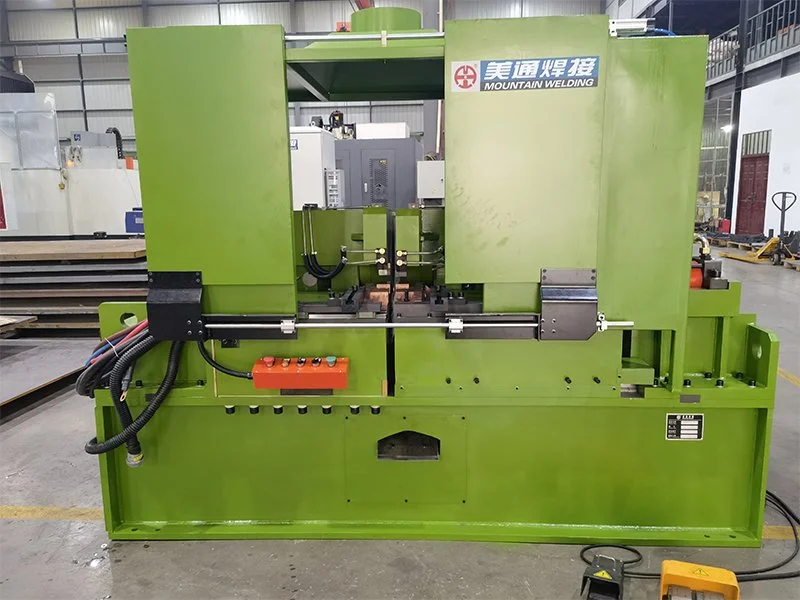
Ring Gear Butt Welding
Specialized butt welding for ring-shaped parts, built to control alignment, upset, and roundness while producing a strong closed-ring joint.
UZC-750
750 kVA power
230 mm min. diameter
220 mm max width
800 m㎡ max cross section
400 kN clamping force
200 kN max upset force
UZC-1500
1500 kVA power
250 mm min. diameter
320 mm max width
1500 m㎡ max cross section
500 kN clamping force
250 kN max upset force
UZC-3000
3000 kVA power
450 mm min. diameter
500 mm max width
3000 m㎡ max cross section
800 kN clamping force
400 kN max upset force
UZC-4000
4000 kVA power
500 mm min. diameter
220 mm max width
3850 m㎡ max cross section
1000 kN clamping force
500 kN max upset force
UZD-600
600 kVA power
300 mm min. diameter
430 mm max width
2100 m㎡ max cross section
700 kN clamping force
350 kN max upset force
UZC-1200
1200 kVA power
450 mm min. diameter
650 mm max width
4000 m㎡ max cross section
1200 kN clamping force
600 kN max upset force
UZC-1800
1800 kVA power
450 mm min. diameter
900 mm max width
5400 m㎡ max cross section
1400 kN clamping force
700 kN max upset force
UNC-200
200 kVA power
230 mm min. diameter
300 mm max diameter
12 mm max width
12 mm max thickness
144 m㎡ max cross section
160 kN clamping force
120 kN max upset force
UNC-300
300 kVA power
240 mm min. diameter
400 mm max diameter
16 mm max width
16 mm max thickness
256 m㎡ max cross section
180 kN clamping force
140 kN max upset force
UNC-1000
1000 kVA power
500 mm min. diameter
650 mm max width
3750 m㎡ max cross section
800 kN clamping force
400 kN max upset force
UNC-400
400 kVA power
240 mm min. diameter
500 mm max diameter
18 mm max width
18 mm max thickness
324 m㎡ max cross section
200 kN clamping force
160 kN max upset force
UNC-1600
1600 kVA power
500 mm min. diameter
650 mm max width
4000 m㎡ max cross section
1200 kN clamping force
600 kN max upset force
UNC-500
500 kVA power
240 mm min. diameter
500 mm max diameter
20 mm max width
20 mm max thickness
400 m㎡ max cross section
220 kN clamping force
180 kN max upset force
FAQ
-
Butt welding joins two parts end to end, such as rods, bars, rings, tubes, or sheet edges. The machine applies electrical current and controlled force at the joint, heating the mating ends and pressing them together to form a strong, continuous weld without filler material.
In our welding lines, butt welding is used to form the wheel rim ring. A flat steel strip is rolled into a circular shape, then the two ends are welded together to create a continuous ring before the rim is further formed and finished.
-
AC seam welding uses alternating current. It is the traditional setup for many seam welding applications and is generally a practical, proven choice for standard lap seam and roll spot welding. It works well when production speed is moderate and the material condition is reasonably consistent.
DC seam welding uses direct current, usually created by rectifying AC power into current that flows in one direction. The textbook states that DC can be used for continuous seam or roll spot welding and usually gives a significant speed improvement, especially in mash seam welding, where speeds over 80 feet per minute are often achieved. The tradeoff is that DC is less forgiving of surface condition. Clean surfaces are especially important in seam welding, and that rust or oil should be avoided, especially when welding with DC power.
-
The key limits are weld-face cross section, part diameter, width, thickness, available power, clamping force, and upset force. A larger cross section or stronger material requires more power to heat the joint and more upset force to forge it properly. The right machine should also match your production rate, tooling needs, and plant power supply.
We will be glad to help you choose the right machines for your needs— please use the form below to inquire for up-to-date quoting. For best sizing, provide the material, part shape, maximum dimensions, and required output rate. -
Power is the welder’s ability to deliver electrical energy to the butt joint during flashing and upset. More available power helps maintain stable flashing and produce enough heat for larger sections, thicker material, or more conductive metals when paired with the correct time, voltage, and force.
Diameter is the size range of the round or ring-shaped part the machine can physically hold, align, and weld. It is a machine and tooling capacity limit, not the weld size itself.
Width is one dimension of the part’s weld face at the butt joint. Wider parts have more joint area, so they usually require more current, stronger clamping, and higher upset force.
Thickness is the other main dimension of the material at the butt joint. Greater thickness increases the amount of metal that must be heated and forged, so it directly affects the machine capacity needed.
Max cross section is the largest total weld-face area the machine can handle. For a rectangular section, it is typically width multiplied by thickness. This is one of the most important capacity limits because upset force and power demand rise with the cross-sectional area of the joint.
Clamping force is the force that holds the two workpieces firmly in the electrodes or clamp jaws during flashing and upsetting. Its job is to maintain alignment, carry current, and prevent the parts from slipping, but it is not the main forging force that makes the weld.
Upset force is the forging force that pushes the heated ends together after flashing. It expels molten metal and oxides from the interface and consolidates the joint into a solid weld. Too little upset force can leave defects, while too much can over-deform the part.