Projection Welding
AC Projection Welding
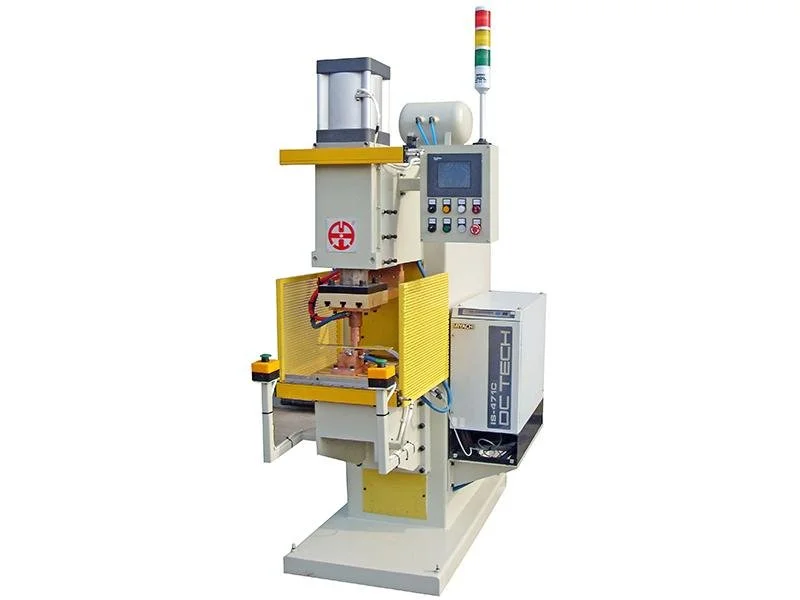
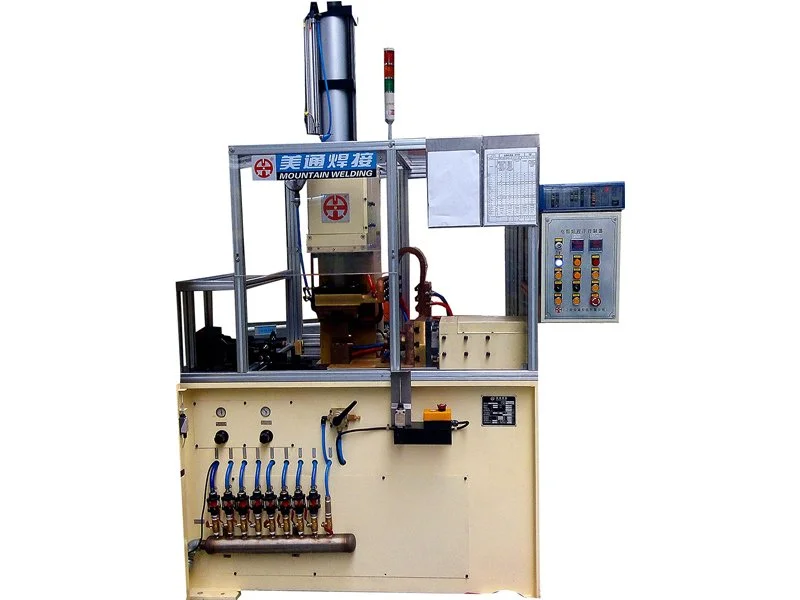
AC projection welders engineered for high-throughput assembly lines and are designed to deliver consistent weld quality on standard steel components—nuts, brackets, studs, and stamped parts—while minimizing operational complexity and maintenance downtime.
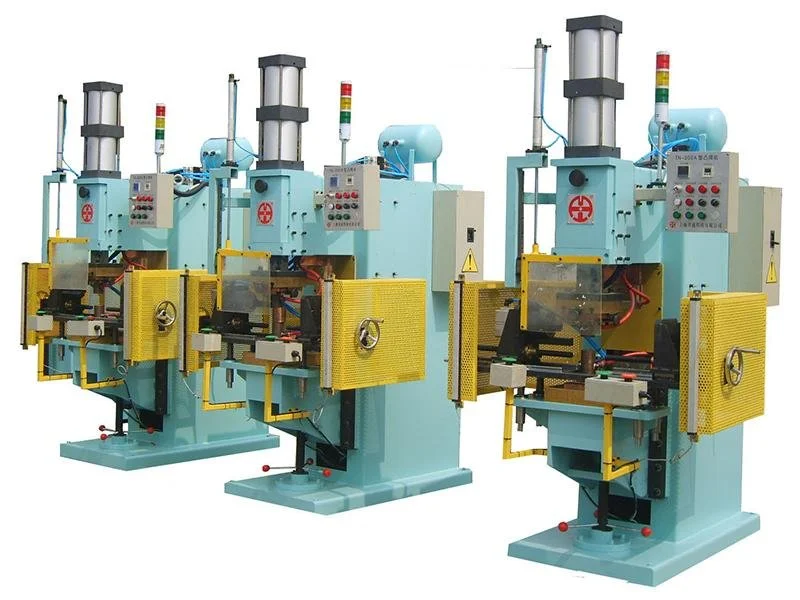
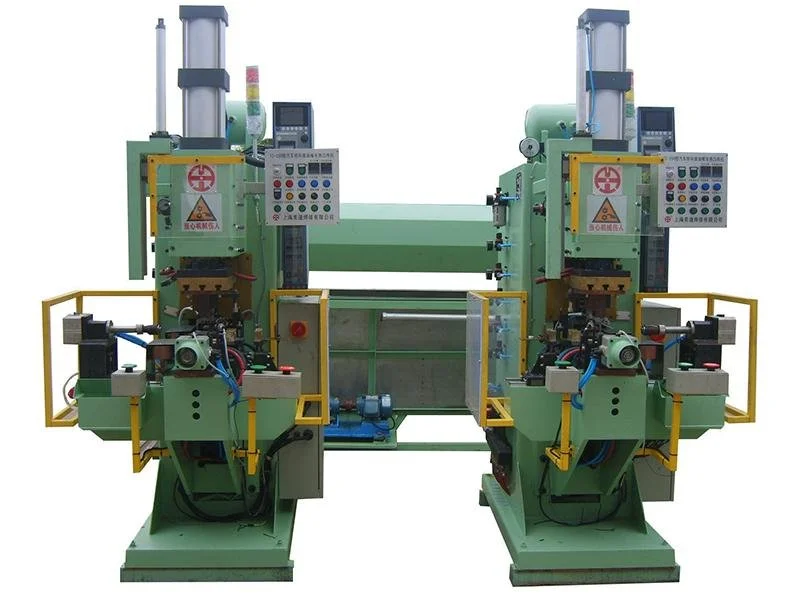
TN-200A
200 kVA power
20 kN capacity
120 mm vertical stroke
350 mm throat depth
300 mm daylight
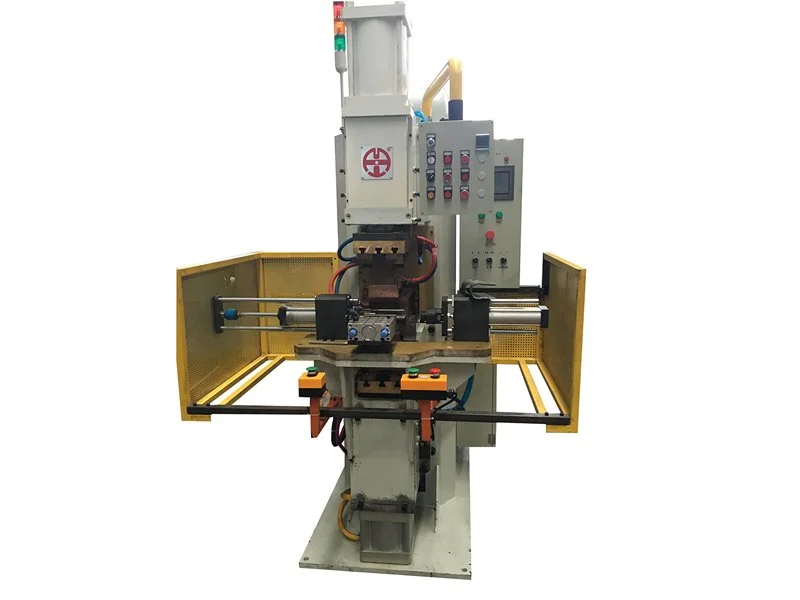
TN-200B
200 kVA power
20 kN capacity
120 mm vertical stroke
350 mm throat depth
300 mm daylight
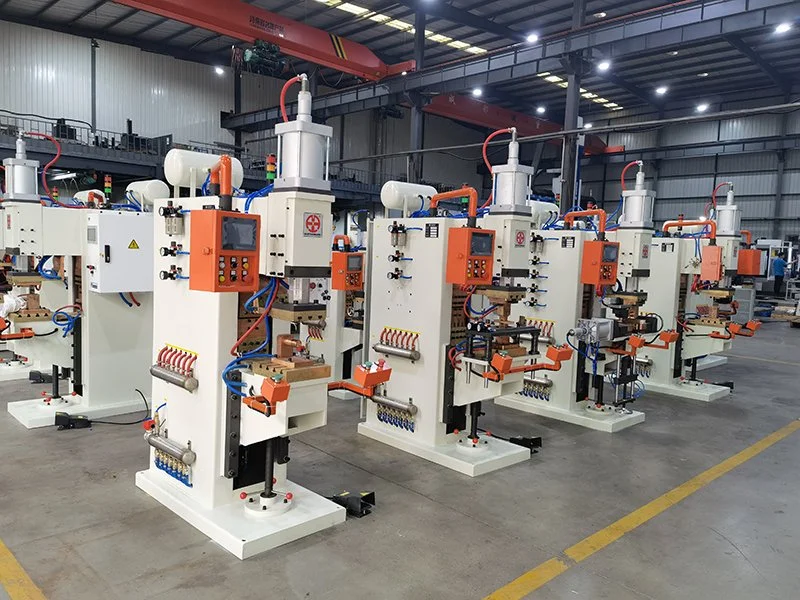
TN-400
400 kVA power
30 kN capacity
150 mm vertical stroke
350 mm throat depth
300 mm daylight
DC Mid-Frequency Projection Welding
DC mid-frequency projection welding is suited for demanding production lines by offering stable current delivery, efficient power use, and strong repeatability for multi-projection and automated welding applications.
TZM-170
170 kVA power
20 kN capacity
120 mm vertical stroke
350 mm throat depth
300 mm daylight
TZM-240
260 kVA power
30 kN capacity
120 mm vertical stroke
350 mm throat depth
300 mm daylight
TZM-340
340 kVA power
40 kN capacity
120 mm vertical stroke
350 mm throat depth
300 mm daylight
DC Rectified Projection Welding
Heavy-duty DC projection welding is suited for larger parts, deeper throats, and high-current applications where reduced circuit reactance and strong weld consistency are required.
TZ-200
200 kVA power
20 kN capacity
120 mm vertical stroke
350 mm throat depth
300 mm daylight
TZ-3X160
3 × 160 kVA power
30 kN capacity
120 mm vertical stroke
350 mm throat depth
300 mm daylight
TZ-3X200
3 × 200 kVA power
40 kN capacity
160 mm vertical stroke
350 mm throat depth
300 mm daylight
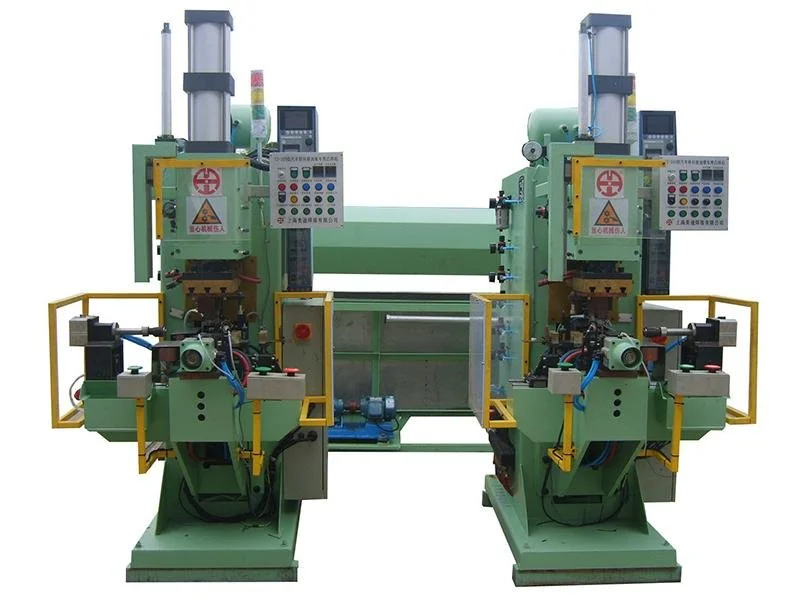
Steering Cylinder Nozzle Projection Welding Machine
Specialized for steering cylinder nozzle assemblies, this machine monitors key welding conditions:
Welding current
Welding voltage
Welding cycle
Welding pressure
Weld penetration
Cooling water temperature
Flow rate
AMW’s specialized automobile steering cylinder nozzle projection welding machine is a dedicated projection welding system designed for high-consistency automotive nozzle assemblies.
Unlike a general-purpose projection welder, this machine combines specialized left and right welding fixtures with real-time monitoring of important variables.,
If any parameter exceeds the preset production limits, the system alarms, stops operation, records the defective part, and requires manual removal before production continues.
This helps improve process control, reduce defective output, and support reliable weld quality in automated automotive manufacturing.
FAQ
-
AC projection welding is the simplest and most economical option for standard steel projection welding, using line-frequency alternating current to create reliable welds with proven, serviceable equipment.
DC Mid-Frequency projection welding uses an inverter and compact transformer to deliver tightly controlled DC weld current, making it well suited for automated systems, repeatable multi-projection welds, and applications where process control is a priority.
DC rectified projection welding converts AC power into one-direction DC current, reducing welding-loop reactance and power demand for higher-current jobs, larger tooling, and heavier-duty projection welding applications.
-
Machine size depends on material type, sheet thickness, weld size, weld count, part geometry, throat depth, stroke, production rate, and required weld quality.
We will be glad to help you choose the right machines for your needs— please use the form below to inquire for up-to-date quoting. -
Power is the welder’s ability to deliver electrical energy to the weld. More current produces more heat at the weld interface, so higher power supports thicker or more conductive materials when paired with the right force and timing.
Capacity describes the practical welding range of the machine, including the material type, thickness, current, and electrode force it can handle reliably.
Throat depth is the horizontal distance from the electrodes back to the nearest machine obstruction, which determines how far into a part the machine can place a weld. A deeper throat allows for larger parts to be welded.
Vertical stroke is the up and down travel of the welding head or ram as it opens, closes, and applies electrode force to the workpiece. More stroke gives more clearance for loading formed or taller parts, while adjustable or retractable stroke options help match the machine motion to the application.
Daylight is the open vertical clearance between the welding platens or tooling, giving room for fixtures, electrodes, part loading, and taller assemblies during projection welding.